You have probably been told that this is very rare, that your doctors have not seen it before, and that there is not much information. All three are true. This is the information we wish we had had — written by patients, checked against the published literature, with the sources shown.
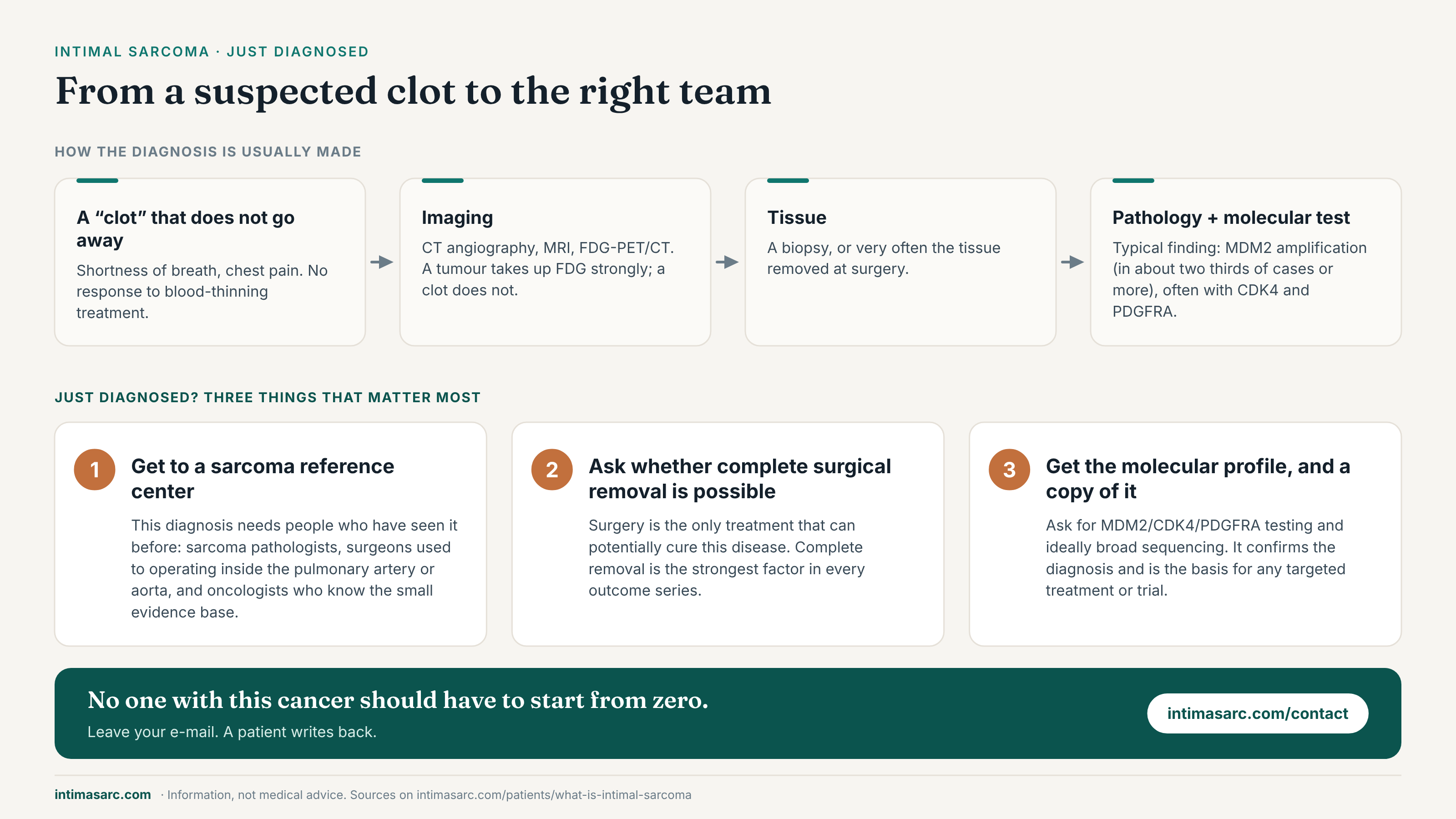
Where it grows, why it is so often mistaken for a blood clot, how it is diagnosed, and the three things that matter most in the first weeks.
Read →The actual published numbers side by side, why they are probably too pessimistic for some people, and what changes the odds.
Read →Surgery, chemotherapy, radiotherapy, targeted drugs against MDM2 and CDK4, immunotherapy, and how to find a clinical trial.
Read →Chemotherapy, pazopanib, CDK4/6 and MDM2 inhibitors, immunotherapy, repeat surgery and radiotherapy: the published evidence, with patient numbers.
Read →Three patient courses with intimal sarcoma of the left atrium: an incomplete operation or a relapse, and what chemotherapy plus radiotherapy achieved.
Read →MDM2, CDK4, PDGFRA, copy numbers, R0, TMB, MSS — decoded line by line, with what to ask for if you do not have it yet.
Read →Why it matters for this diagnosis, how it works, and where to find certified sarcoma centers in your country.
Read →A printable list for your next appointment — including the ones about surgery experience, molecular testing, tissue and trials.
Read →And then, if you want to: write to us. A patient answers, not a bot. We cannot give medical advice, but we can tell you what we learned, where we would look, and whom we would ask.
No long message needed. One line is enough, or nothing at all: we will write to you first, usually within a few days. There is also a small private group of patients and relatives; ask us and we will invite you.